Hagakure as the main theme –
Welcome to the “Virtual Museum of Japanese Chivalry “!
This museum, hosted by Takashi Kamura on the net, provides various materials on Japanese chivalry.
We have “Bushido”, written by Inazo Nitobe in English, as a book introducing Japanese chivalry. But, this book, though showing one type of Japanese chivalry, does not refer to all aspects of the samurai concept. By my thought, Japanese chivalry regarding occupational ethics has two types: one with the backbone of Confucianism from which Nitobe introduced, and the one with the backbone of Buddhism. Knowing the difference between the two would be to understand the current “Japan,” too.
Takashi Kamura:
Born in 1950. Since childhood, having had interest in “Hagakure,” the book on Japanese chivalry, written in Kyushu, he has been publishing many articles on the concept.
At present he is a lawyer, also was lectured at Meiji University and Nihon Bunka University.
* Two types of Japanese chivalry
Japanese chivalry is roughly divided into two in this museum: Hagakure’s Japanese chivalry and Tokugawa’s Japanese chivalry.
Hagakure’s Japanese chivalry is the one written in the book of “Hagakure”. This came into being in 1716 in Saga Prefecture (formerly called the Saga clan, in Kyushu).
Now, let’s explain the origin of Hagakure’s Japanese chivalry, primarily based on the relations between Japan and the international society.
1. Japan used to be a dependency of China in the former times. However, Japan leaves China later, and the periods of the genuine Japanese culture of its own come up.
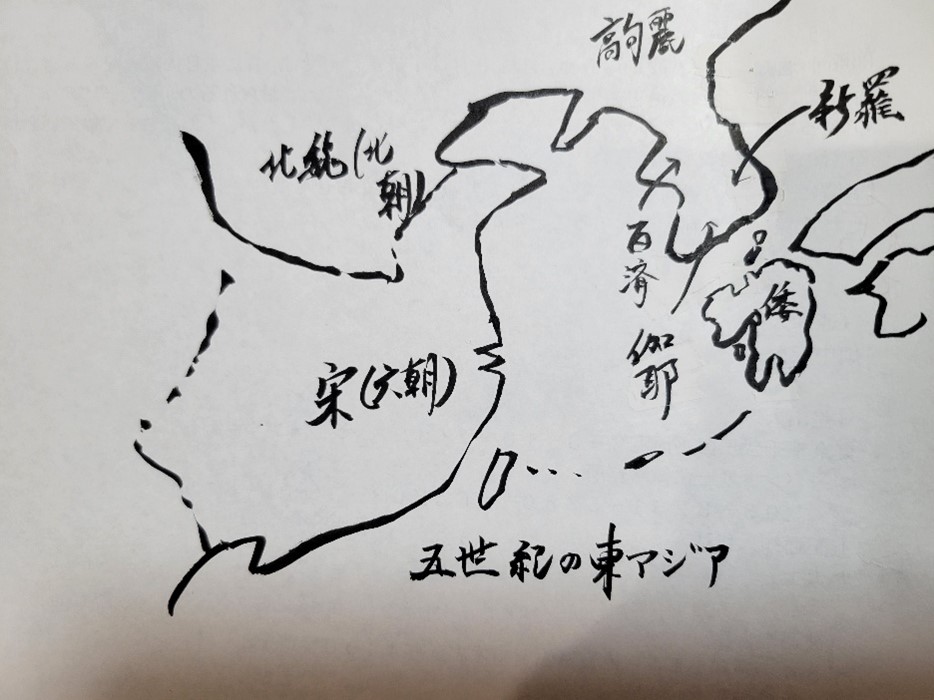
“Wa” is the name of Japan in those days.
2. In 960, Tang Dynasty falls and Sung takes the control of China. Then, the relations with Japan come out strongly. For example, in Saga Prefecture, the birthplace of Hagakure, Taira Tadamori, who had been governing the region, became powerful investing the profits from Kanzaki Sho into the trade with Sung.
The base, in Saga, of the sect which had the headquarters in Nara and had the trade with China at that time
This age was strongly influenced by the genuine Japanese culture, as well as by Buddhism. This means the age of “mercy and sympathy” of the genuine Japanese culture and Buddhism, or the age of “substantial” merits of the trade.
After that, in the Muromachi Period, Japan again became a dependency of Ming Dynasty of China. In those days, in Ming, the emperor monopolized the trade. The emperor there, and the tycoon here in Japan, becoming a dependency of the Chinese emperor, trying to earn profits monopolizing the rade on both sides, were aiming at the same puropse in this sense. You will see that it was still the age of the “substance and sympathy.”
Kaito Shokoku Ki
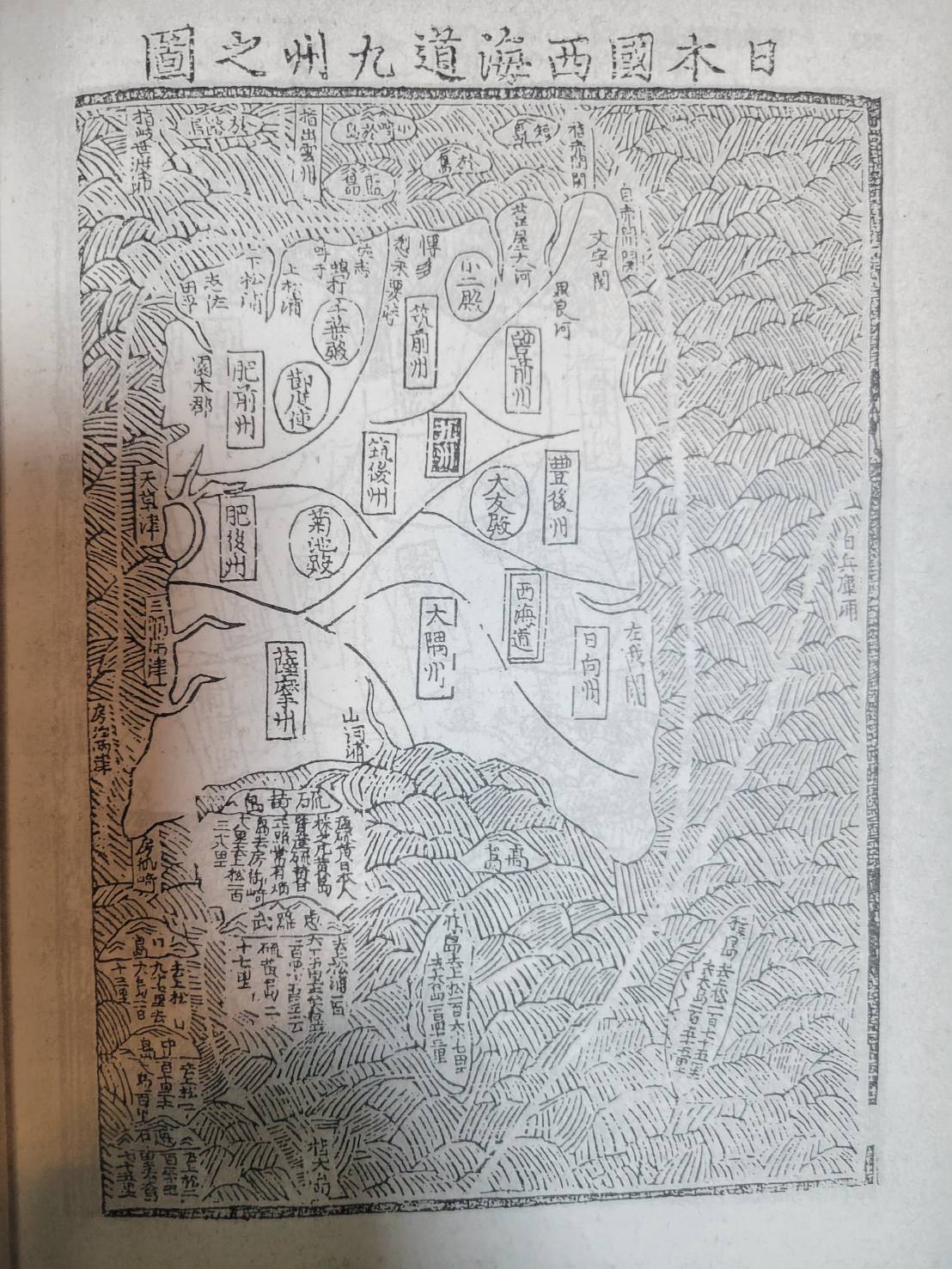
The book on Japan written by a Korean scholar. It shows vivid movements of the Japanese people toward the international trade.
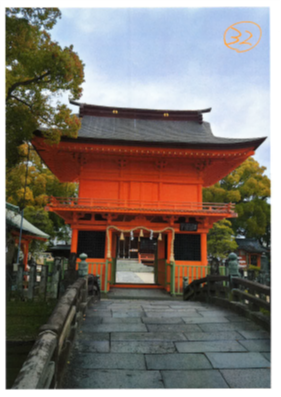
The gate of Yoka Shrine, Saga City
The general Shoni Masasuke, who built this gate, was also active in the trade with Korea.
3. However, in 1644, at the beginning of the Edo Period, Ming finally collapsed because the Emperor Su Tei was obliged to commit suicide owing to the revolt of the farmer army.
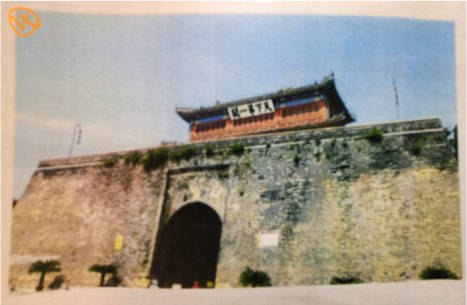
4. As concrete instances of the Chinese influence, we can take civil engineering and astronomy. As invisible influences, law and calendar. As a matter of fact, Japan, where longitude is different from that of China, had to make its own calendar, referring to China. As will be stated in the following, an astronomical observatory was constructed as an substantial expression of certain type of ultra-nationalism.
In other words, the core of the following story is in the phrase “referring to China” or being based on China.
A Chinese emperor used, as a symbol of power, the issuance of a calendar.
This astronomical observatory has its origin in the period of the Yan.
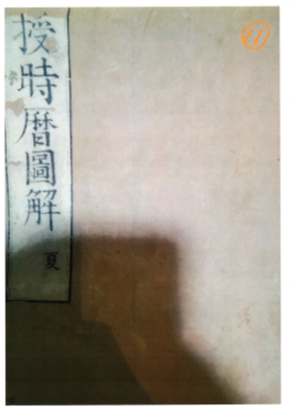
To insert Juji Reki Zukai.
A calendar revising the Islamic calendar.
5. Tycoon regime and Demarcacion
The generals of the Tokugawa shogunate became a kind of emperor, named Tycoon, rather than not being contained by China.
This should be seen from the view point of world history including occidental history. In the beginning of the 16th Century, Portugal and Espana concluded Zaragoza Treaty, in addition to Tordesillas Treaty, concluded at the end of the 15th Century, finally completing “demarcacion (demarcation)” (global partition). Since this partition line passed just on Japan, it was feared that monarchs (daimyos), residing both ends of the land of Japan, might divide up Japan. Then, the general, as the ultimate ruler of the armed forces, became a tycoon, in my opinion, having a defensive intention to avoid the east-western breakup of the land of Japan.
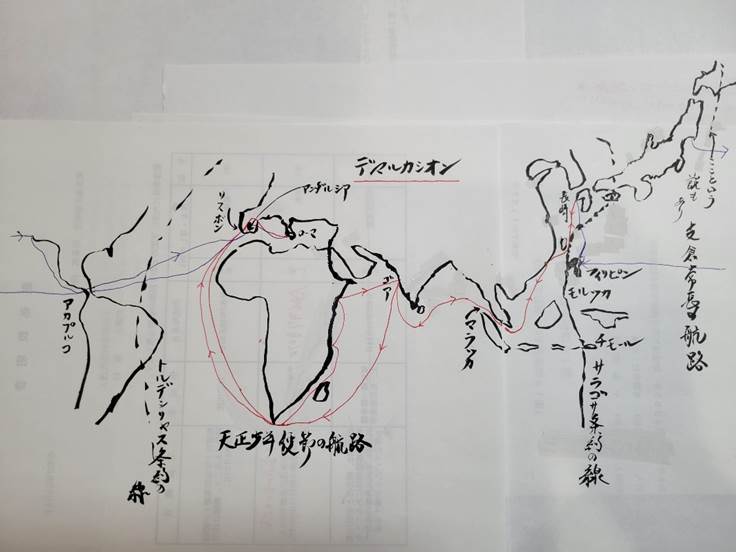
Date Masamune, a Japanese daimyo, tried to organize Sendai Bay to establish a trade with Spain.
6. As a conceptual backbone of this tycoon regime, what has come into Japan through Ming’s surviving retainer is the thoughts of Confucianism. The Middle Age in Japan was what we call the age of Buddhism, while Confucianism was nothing but an educational part for priests. But, from then on, Confucianism came to Japan at a stretch, as a legal system. As a result, the “affected martial arts as Edo Kyoto style” and Japanese chivalry, with the backbone of Confucianism which was criticized by Hagakure itself, were born. This conceptual environment is also a kind of rigorous “nomocracy.” Nitobe Inazo’s “Bushido” is a good instance in this meaning.
This Japanese chivalry is stylistic, as well as rational and intellectual, contrary to sympathy and substantiality of another type of chivalry. The root of nomocracy or bureaucracy in Japan, with a negative sense, lies here.
Ruth Benedict, an American anthropologist, called the Japanese culture as a “culture based on the sentiments of shame.” It can be substituted for nomocracy with a negative image. For example, the former (pre-war) Japanese laws had no word equivalent to “defeat.” Such a word or term was unthinkable and could not be allowed at all. On the other hand, when loosing the World War II and the authorities ordered to obey the U.S., as symbolized by the GHQ, the Japanese people obeyed dutifully them, to which, as a matter of fact, Japan had been anathematizing only yesterday. Benedict was very surprised at such drastic transformation of the Japanese people.
Ogyu Sorai’s “Minritsu Kokuji Kai”
A commentary book on the Chinese criminal law, written at the middle of the Edo Period
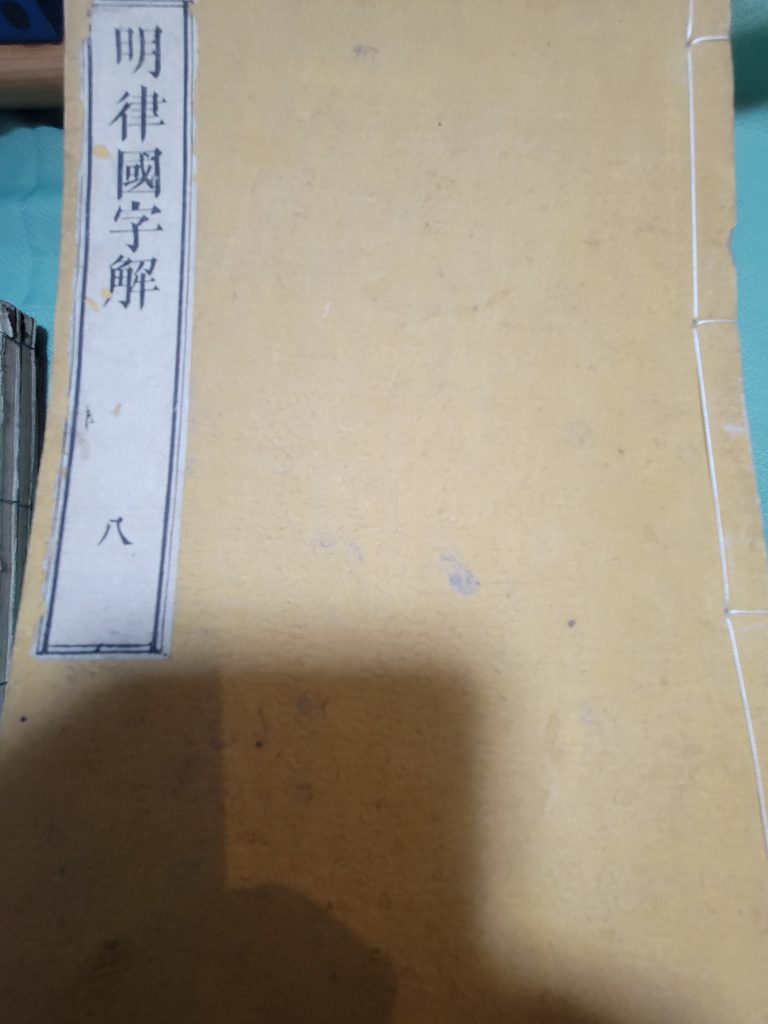
One of those who propelled such Japanese chivalry was Mito Komon. He, at 18 years old, read “Shi ji(historiography)” written by Si ma Quian, a Chinese hisotiran, impressed by the episodes of Hakui and Shukusei, and put his political basis on the concept of the historiography.
On the other hand, Hoshina Masayuki, Komon’s friend and relative at Aizu, cherished this same concept.
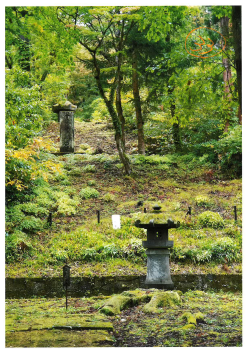
At any rate, on the premises of these arguments, a lord can, without condition, limit the citizens’ liberty and properties. But, there exists a Chinese point view of nation that an anarch must protect its citizens. This is, however, a Confucian chivalry. We have to say that there is a misunderstanding that Japanese chivalry is this.
7. In the Edo Period and the Meiji Period, the difference is only whether the anarch is a tycoon (Aizu type) or an emperor (Mito or Meiji type). Bureaucrats, or responsible guardians of citizens, have been in charge of the management of a nation, while generals or emperors were not responsible for it at all.
The essence of the concepts of the Mito or Aizu clans, esteemed to be extremely nationalistic, was imported from the Chinese regime. That is why, in the former, I said that the core of the following story is in the phrase “referring to China.”
8. “Hagakure chivalry”
Contrary to the Tokugawa chivalry, this Hagakure chivalry is criticized as “affected martial arts as Edo Kyoto style.”
First of all, let’s begin with the formation of Hagakure.
Hagakure was a dictation work by an attendant who heard what another attendant of the Nabeshima family, govering the Saga clan in the latter of the 16th Century, told.
Gate of the Saga Castle
Gate of the Saga Castle. Hagakure was born in Saga.
Letter of Nabeshima Katsusige
A letter of the first seigior of the Saga clan.
In those days, Nabeshima Katsusige, the seignior of the Saga clan, whose heart ached for self-immolation of his attendants, issued the prohibition against self-immolation in 1661. As a result, Yamamoto Tsunetomo, an attendant of Mitsuhige from infancy, retired to be a priest at the northern suburb of Saga, because he had always wanted to immolate himself for the seignior. Then, he compiled what he told to Tashiro Tsuramoto, a visitor to the place of retirement, and finally completed Hagakure, as his codification on chivalry, in 1776.
Letter of Nabeshima Naohiro
Naohiro is a son of Katsuhige. At the death of Naohiro, the prohibition against self-immolation was issued.
Portrait of Miyamoto Musashi
He is about two-generation earlier than Hagakure. Though being abstract, he developed his own chivalry concept more practical than Hagakure.
9. Significance of seppuku
Hagakure and the the Tokugawa chivalry have no osculation in the significance of seppuku, too. During the period of civil strife, or Hagakure’s days, seppuku was not necessarily supposed to be appreciated even if beaten in a war. In such a mentality, warriors were unable to continue wars in succession, needless to say. Sometimes, they were intentionally defeated to deceit the enemies. This is a medieval “practical” way of thinking. Under the circumstances that they fought for the lord and were cherished by the lord, they wanted to immolate themselves at the death of the lord and committed seppuku voluntarily. Under this idealistic sentiment, Tsunetomo thought the prohibition against self-immolation was just a non-sense. This is, after all, completely different from a Confucian seppuku, usually done a bureaucrat taking responsibility for mismanagement. From this sense, too, the contemporary Japan, long dependent on the bureaucratic responsibility, is an extension of the Tokugawa chivalry. If so, we should strictly be responsible for what we have done. However the reality is far from it. That is why we have, at present, many problems, socially.
Mishima Yukio
He, undoubtedly first-rate as a novelist, was also unaware of the difference between the two types of chivalry.
The significance an dinstruction of Hagakure in the present days
On the whole, it can be said that the bureaucratic or nomocratic nation since the Edo shogunate had, until recently, a backbone or axis of a tycoon or emperor, and that the bureaucrats, excellent and with profound sense of responsibility, constructed the current Japan. However, seeing that the axis has gone away and that we have to indicate the loss of the bureaucrats’ perspective responsibility, we rather must go back to the days of chivalry in the Middle Age, recovering responsibility ourselves as citizens.
This should be a true “democracy.” Thinking chivalry leads directly to democracy in the end. We should not forget the fact that in the former times Japan had a tradition of democracy, too.
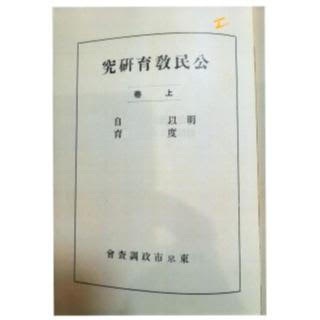
Komin Kenkyu (study on citizenship education)
A book written, despite under the old pre-war constitution, to elevate the maturity of the Japanese people’s understanding to democracy. It should be said that this book demonstrates the necessity of studying the traditional Japanese chivalry.
Goseibai Shikimoku and Osadame Gaki
These two codes are, in the essence, the same “samurai’s law.” The former was enacted in the 13th Century, and the latter in the 18th Century. The important point is that, rather than the difference of the period of the formation, the former is a kind of unwritten law, like Anglo-American law, and the latter is something like a set of minute notices.
Goseibai Shikimoku
Osadame Gaki
Finally, I believe that we Japanese should study the former, namely Goseibai Shikimoku, more than ever.